A Guide to Respiratory Equipment for Healthcare Facilities: Types, Uses & What to Consider
Choosing the right respiratory equipment is an important part of supporting patient care, maintaining reliable medical systems, and keeping healthcare facilities operating efficiently.
From oxygen delivery and monitoring to suction equipment and aerosol therapy, respiratory devices serve a variety of functions in hospitals, clinics, and other healthcare environments.
With so many equipment types, manufacturers, and specifications available, finding the right products can feel overwhelming.
At Susquehanna Micro, we specialize in respiratory and pulmonary equipment sales, service, and support for healthcare professionals throughout North America. Our team works with trusted manufacturers to help facilities source dependable equipment, replacement components, and service solutions.
In this guide, we'll explore six common categories of respiratory equipment, explain their primary functions, and highlight important considerations when selecting products for your facility.
1. Medical Aspirators & Suction Equipment
Medical aspirators are designed to remove fluids, mucus, and other secretions when suction is required during patient care. These devices are commonly used in hospitals, emergency medical settings, clinics, and other healthcare environments.
Depending on the application, facilities may need portable suction equipment or stationary units.
What to Consider When Choosing an Aspirator
- Suction performance
Evaluate the vacuum range and airflow requirements for the intended application. - Portability
Battery-operated models can be useful when equipment needs to move between locations. - Power requirements
Consider whether the device will operate from an electrical outlet, battery, or another supported power source. - Maintenance
Review collection container capacity, filter requirements, and cleaning procedures.
Susquehanna Micro carries Precision Medical suction equipment, including Easy Vac, Power Vac, and Easy Go Vac aspirators. These products offer different configurations for healthcare facilities seeking dependable medical suction solutions.
Explore Medical Aspirators & Suction Equipment >>
2. Air/Oxygen Blenders & Air Mixers
Medical air/oxygen blenders combine compressed medical air and oxygen to provide a controlled oxygen concentration for compatible respiratory equipment.
These devices are used in healthcare settings where respiratory support systems require a specified oxygen mixture. Different blender models are designed to accommodate different flow requirements and operating conditions.
What to Consider When Choosing an Air/Oxygen Blender
- Flow Requirements
High-flow, low-flow, and continuous-flow models serve different equipment needs. Selecting the appropriate configuration depends on the intended application. - Oxygen Concentration Range
Verify the available oxygen concentration settings and whether they meet the requirements of the connected respiratory system. - Gas Supply Requirements
Check the manufacturer's specified inlet pressure requirements and connection configurations. - Equipment Compatibility
Blenders must be compatible with the respiratory equipment they support, including applicable flow and pressure requirements.
Susquehanna Micro supplies Bio-Med Devices air/oxygen blenders, including the 2001 High/Low Flow, 2002 High Flow, 2003 Low Flow, and 2004 Continuous models. Our team can help healthcare equipment buyers compare available configurations and review product specifications.
EXPLORe Air/Oxygen Blenders & Air Mixers>>
3. Nebulizers & Medical Air Compressors
Nebulizers and compressors are commonly associated with aerosol therapy, but they perform different functions.
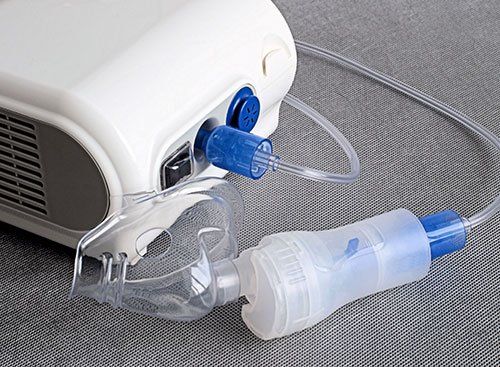
A nebulizer converts compatible liquid medication into an aerosol that can be inhaled. A medical air compressor supplies pressurized airflow to operate certain types of nebulizers and other compatible equipment. Some products combine these functions into a single compressor/nebulizer system.
Common Types of Nebulizer Equipment
Compressor/Nebulizer Systems
These systems use compressed air to generate an aerosol from a compatible liquid medication. They are available in different sizes and configurations.
Ultrasonic Nebulizers
Ultrasonic nebulizers use high-frequency vibrations to create an aerosol. Their suitability depends on the intended application and medication compatibility.
Standalone Medical Air Compressors
Medical air compressors provide airflow for compatible respiratory equipment and may be purchased separately when an integrated nebulizer system is not required.
What Should Healthcare Facilities Consider?
When comparing nebulizers and compressors, consider the equipment's aerosol output, operating pressure, airflow, portability, cleaning requirements, and compatibility with the intended application. Susquehanna Micro carries respiratory equipment from manufacturers including DeVilbiss, NOUVAG, and Precision Medical. Available products include compressor/nebulizer systems, ultrasonic nebulizers, and medical air compressors.
Browse Nebulizers & Compressors >>
Related reading: Nebulizer vs. Compressor: What's the Difference?
4. Medical Oxygen Flowmeters
Medical flowmeters are used to regulate and indicate the flow of oxygen or medical air through compatible gas delivery systems.They allow healthcare professionals to set flow rates according to the equipment's intended use and applicable clinical requirements.
Flowmeters are available in several configurations, with differences in flow range, design, and connection type.
Common Types of Medical Flowmeters
Chrome Body Flowmeters
These flowmeters use a visible flow tube and indicator to display gas flow. They are commonly selected for their straightforward design and readability.
Dial Flowmeters
Dial flowmeters feature selectable flow settings in a compact design without a traditional exposed flow tube.
Pediatric Flowmeters
Pediatric flowmeters are designed for specialized low-flow applications where smaller flow increments are required.
Choosing the Right Flowmeter
Healthcare equipment buyers should always verify:
- The required gas type, such as oxygen or medical air
- The necessary flow range
- The connection and adapter configuration
- Compatibility with existing medical gas systems
- Manufacturer specifications and maintenance requirements
Susquehanna Micro supplies Precision Medical flowmeters, including chrome body, dial, and pediatric models. Our available selection includes multiple flow ranges and adapter configurations for different healthcare equipment requirements.
5. Oxygen Analyzers & Oxygen Sensors
Oxygen analyzers measure oxygen concentration in gas mixtures and are used in respiratory care, equipment testing, and other applications where oxygen concentration must be verified.
An oxygen analyzer typically works with a sensor that detects oxygen and provides a measurement signal. Depending on the model, analyzers may support spot-checking, continuous monitoring, or other specialized functions.
Oxygen Analyzers vs. Oxygen Sensors
Although the terms are sometimes used together, they refer to different components.
- An
oxygen analyzer
is the instrument that processes and displays an oxygen concentration measurement.
- An oxygen sensor is the component responsible for detecting oxygen and generating the measurement signal.
Some analyzer systems use replaceable oxygen sensors that must be maintained or replaced according to manufacturer instructions.
Important Purchasing Considerations
When selecting an oxygen analyzer, consider:
- Measurement range and accuracy requirements
- Spot-checking versus continuous monitoring capabilities
- Whether audible or visual alarms are needed
- Sensor compatibility and replacement availability
- Calibration and maintenance requirements
Susquehanna Micro carries oxygen analyzers and replacement oxygen sensors from several established medical equipment manufacturers. Our team can help customers review equipment specifications and identify compatible replacement products.
Browse Oxygen Analyzers & Sensors >>
6. Medical Oxygen Regulators & Vacuum Regulators
Medical regulators are used to control gas pressure, flow, or suction, depending on the device's design and intended application.
Two important categories are oxygen regulators and vacuum regulators.
Medical Oxygen Regulators
Oxygen regulators reduce pressure from a compatible oxygen source and, depending on the model, provide selectable flow settings. They are available with different cylinder connections, adjustment methods, and flow ranges. Susquehanna Micro offers Precision Medical oxygen regulators, including Easy Dial, Easy Gauge, and PulseDose LT models.
Vacuum & Suction Regulators
- Vacuum regulators control suction supplied by a compatible medical vacuum system.
- Some models provide continuous regulated suction, while others include selectable intermittent operating modes.
- Susquehanna Micro carries Precision Medical and Amvex vacuum and suction regulators in several configurations.
What to Consider Before Purchasing a Regulator
When selecting a medical regulator, verify:
- Whether the application requires oxygen delivery or vacuum suction
- Required flow or pressure specifications
- Cylinder, wall outlet, or vacuum source connection compatibility
- Available operating modes
- Maintenance and inspection requirements
Because oxygen regulators and vacuum regulators serve different functions, equipment should always be selected according to its intended application and manufacturer specifications.
7. What to Consider When Purchasing Respiratory Equipment
Choosing respiratory equipment involves more than comparing prices or product features. Healthcare facilities also need to consider compatibility, maintenance requirements, long-term support, and the demands of their clinical environment. Before purchasing new equipment or replacing an existing device, consider the following factors.
Equipment Compatibility
Verify that the equipment is compatible with existing medical gas systems, accessories, connections, and other devices. Manufacturer and model information can be especially helpful when sourcing replacement equipment.
Product Specifications
Review the equipment's operating ranges, power requirements, measurement capabilities, and intended applications. Products that appear similar may have important technical differences.
Maintenance & Service Requirements
Some respiratory devices require periodic inspection, calibration, sensor replacement, or other preventative maintenance. Understanding these requirements before purchasing can help facilities plan for long-term equipment operation.
Replacement Parts & Accessories
Consider whether replacement sensors, tubing, filters, or other compatible components are available. Access to appropriate replacement products can be an important part of equipment lifecycle planning.
Manufacturer & Supplier Support
Working with an experienced respiratory equipment supplier can simplify product selection, purchasing, and service coordination. A knowledgeable supplier can help healthcare facilities compare available models and understand their equipment options.
8. Why Choose Susquehanna Micro for Respiratory Equipment?
For healthcare facilities and biomedical equipment teams, finding a reliable respiratory equipment supplier means having access to quality products and knowledgeable support.
Susquehanna Micro provides respiratory and pulmonary equipment sales and service throughout North America.
As a distributor and factory-trained service provider for equipment from multiple established manufacturers, our team brings extensive experience to healthcare equipment purchasing, maintenance, and support.
Our Respiratory Equipment Capabilities Include:
- Medical aspirators and suction equipment
- Air/oxygen blenders and air mixers
- Nebulizers and medical air compressors
- Oxygen and medical air flowmeters
- Oxygen analyzers and replacement sensors
- Medical oxygen and vacuum regulators
- Service, repair, and preventative maintenance for qualifying equipment
Whether your facility needs replacement equipment, additional respiratory devices, or assistance identifying a compatible product, our team is available to discuss your requirements.
Explore all Respiratory Equipment >>
Frequently Asked Questions About Respiratory Equipment
What types of respiratory equipment are commonly used in healthcare facilities?
Healthcare facilities use many types of respiratory equipment, including nebulizers, compressors, medical aspirators, air/oxygen blenders, oxygen flowmeters, oxygen analyzers, and medical gas regulators. Each category serves a different purpose in respiratory care, oxygen delivery, suction, or equipment monitoring.
What's the difference between an oxygen flowmeter and an oxygen regulator?
An oxygen regulator typically reduces pressure from a compatible oxygen source, while a flowmeter is used to set and indicate gas flow. Some devices combine pressure regulation and selectable flow settings. The appropriate equipment depends on the gas source and intended application.
How do I know which respiratory equipment is compatible with my facility's existing systems?
Start by identifying the manufacturer and model of your existing equipment, along with its gas connections, operating requirements, and intended application. Reviewing manufacturer documentation and consulting an experienced equipment supplier can help identify compatible products.
Does respiratory equipment require regular maintenance?
Many respiratory devices require periodic inspection, cleaning, calibration, or replacement of specific components. Maintenance requirements vary by equipment type and manufacturer. Healthcare facilities should follow the applicable manufacturer instructions and their established equipment maintenance procedures.
Can Susquehanna Micro help our facility source respiratory equipment and replacement parts?
Yes. Susquehanna Micro supplies a range of respiratory equipment, oxygen sensors, and related products from established manufacturers. Our team can help healthcare facilities review available products, compare specifications, and discuss service options for qualifying equipment.
Find the Right Respiratory Equipment for Your Facility
From medical suction devices and nebulizers to oxygen monitoring equipment and regulators, choosing appropriate respiratory products starts with understanding your facility's needs.
At Susquehanna Micro, we're committed to helping healthcare professionals source dependable equipment backed by knowledgeable sales and service support.
Whether you're replacing an existing device, comparing product options, or planning an equipment purchase, we're here to help.
Contact Susquehanna Micro to Discuss Your Respiratory Equipment Needs
Share this post
Previous Articles